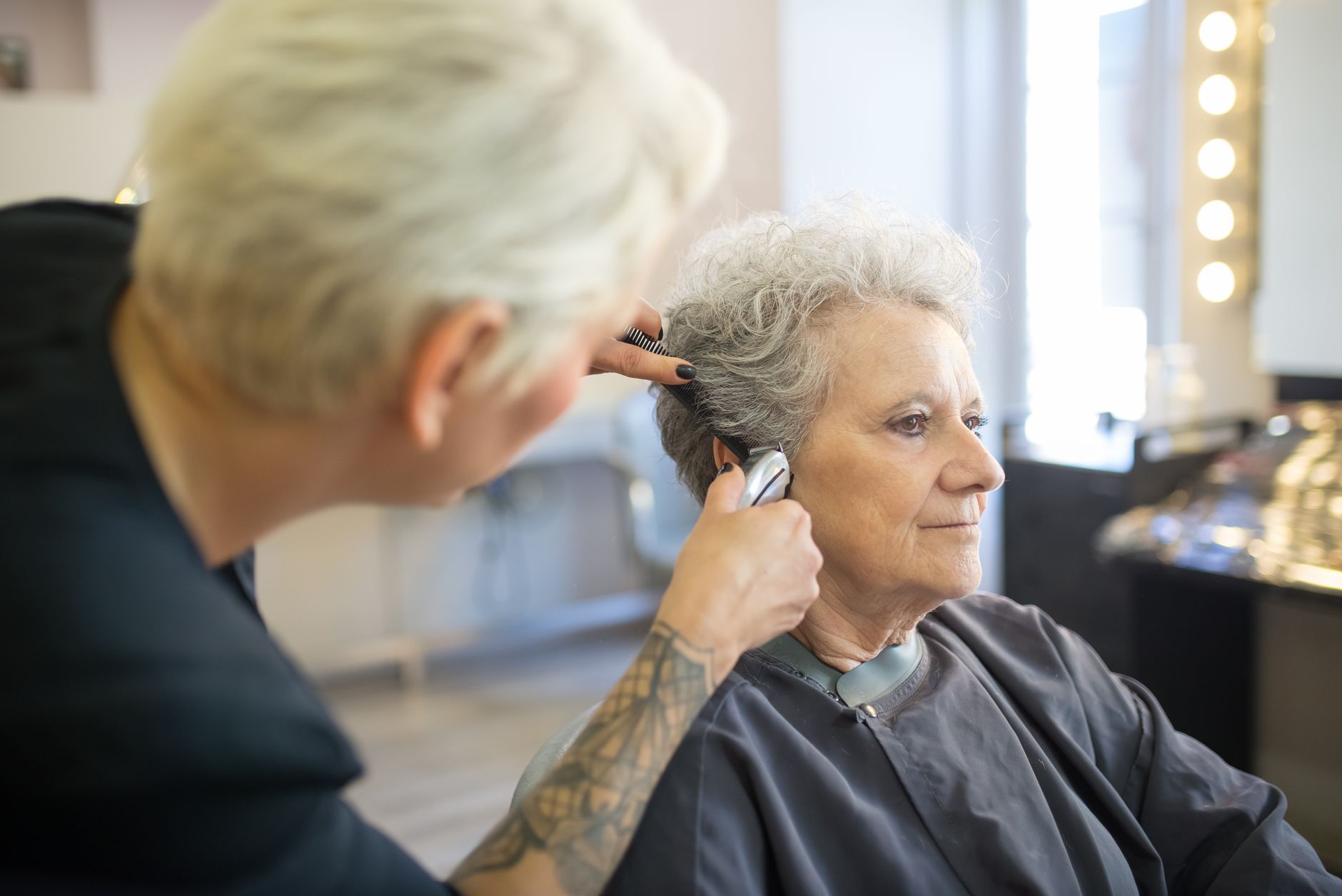
A salon or spa lives or dies by a single metric: chair utilisation. Every empty 30-minute slot is gross profit that does not come back. The painful truth is that most independent salons run at 55 to 70 percent utilisation when the realistic ceiling is closer to 85 percent — and the gap is almost never a problem with the service itself. It is no-shows, late cancellations, gaps the front desk did not fill, lapsed clients who quietly drifted to a competitor, and rebookings that were promised and never made. All of that is admin. All of it is automatable.
AI in 2026 will not cut hair, do a balayage, or give a facial. What it can do is keep the diary full, recover the bookings you are losing today, sell more retail without anyone pitching, and quietly run the marketing and reminders that take you (or your manager) two hours an evening. This guide walks through the five workflows where AI pays back fastest in a salon or spa, a tool stack scaled by chair count, the risks worth taking seriously, and a 30-day pilot you can run on a single stylist or treatment room before committing the whole business.
Where AI actually helps a salon or spa (and where it does not)
The first step is to be precise about which parts of running a salon are genuinely automatable. Beauty business owners tend to fall into one of two camps — either chasing every shiny tool that gets pitched at trade shows, or assuming AI cannot help because "this is a people business". Neither is right. The work itself is people work; the business around the work is largely admin, and that admin is exactly where AI lives.
The high-confidence automation zone covers online booking and rebooking, no-show prevention, client reactivation campaigns, review and feedback collection, social media and Instagram content, retail product recommendations, supplier reordering, payroll and rota admin, and the bulk of your client messaging. These are pattern-based tasks where modern AI tools handle 80 to 95 percent of the work at a fraction of the cost of a part-time receptionist.
The human-required zone covers the service itself, consultations on colour or treatment changes, complaint resolution that touches on sensitive results, training new juniors on technique and standards, and any conversation where the client is anxious about their appearance. AI can draft, remind, and suggest — but a stylist or therapist has the conversation. That line protects your client relationships and protects you from quietly losing your premium clients to a competitor who still picks up the phone.
The grey zone, where things go wrong, is anywhere the brief is vague or the client is new to the salon: first-time colour corrections, complex treatment series, wedding-party bookings, and anyone with a known skin or scalp condition. Let AI book and confirm — but always route the consultation itself to a human, and never let the bot promise a result the stylist has not signed off on.
The five workflows worth automating first
1. Online booking, rebooking, and no-show prevention
No-shows and last-minute cancellations are the single biggest profit leak in the industry. Industry benchmarks put the typical salon no-show rate at 10 to 15 percent, and a 50-chair-hour week with a 12 percent no-show rate is losing roughly six hours of billable time every week — easily €400 to €1,200 of revenue depending on your average ticket.
Modern salon software — Fresha, Treatwell, Booksy, Phorest, Mindbody, Vagaro, Timely — now ships with AI-driven booking and reminder layers. The most valuable feature is not the booking widget itself; it is the smart waitlist. When a client cancels at 4pm for tomorrow morning, the AI texts the right three waitlisted clients in priority order based on their booking history, who has paid in advance, and who lives closest. The slot refills before you have noticed it dropped. Salons running smart waitlists routinely report no-show losses cut by 40 to 60 percent in the first quarter alone.
Layer on deposit-on-booking for high-value services (colour, lash extensions, treatment packages) and AI-personalised reminder sequences that include the stylist's name, the service, parking notes, and a one-tap reschedule link. The point is to make rescheduling easier than ghosting — and the data shows clients will take that option when it is offered politely 48 and 24 hours out.
2. Client reactivation and retention
Most salons have a hidden pipeline sitting in their CRM: clients who came two or three times and then quietly stopped. They did not complain, did not cancel, just stopped rebooking. Industry data suggests roughly 30 to 40 percent of a salon's client list is "lapsed" at any given moment, and the cost of bringing one of them back is typically a tenth of acquiring a new client through paid ads.
AI inside your salon software can segment lapsed clients automatically (last visit 90+ days, last visit 180+ days, last visit 12+ months) and send personalised reactivation messages with the right offer for each segment. A 90-day lapse usually needs a friendly "we miss you" with a soft incentive; a 12-month lapse needs a stronger offer and an apology for the gap. A Claude or ChatGPT prompt tied to your client list can draft these in your tone of voice in minutes, not hours.
A prompt that works: "You are a copywriter for an independent salon. The client below has not booked in [X] days. Their last service was [service] with [stylist]. Draft a warm, two-paragraph SMS (under 320 characters) and an email version, both inviting them back, mentioning [stylist] by name, and offering [specific incentive]. Avoid pushy language. Sign off as [salon name]." Run that across 50 to 100 lapsed clients and a 10 to 15 percent reactivation rate is realistic — that is five to fifteen returning clients, each worth a year of repeat bookings.
3. Retail recommendations and upsell
Most salons leave 5 to 15 percent of additional revenue on the table because the stylist forgets to recommend the shampoo, the front desk did not have the conversation, or the client was rushed out the door. AI fixes this in two places. At the chair, a tablet-based client profile (built into Phorest, Mindbody, or Vagaro) suggests the right three retail products for that client based on service history, hair or skin type, and what previous similar clients have purchased — so the stylist just has to confirm. Post-visit, an automated email or SMS recommends a refill window for retail products the client bought before, and a related new product if available.
The cleanest pattern is recommendation at the chair, fulfilment at the desk. A salon that adds a structured retail recommendation step into the checkout — even a one-line "here are the three I'd reorder for you" — typically lifts retail attach rate from a 1 in 5 client average to 1 in 2 or 1 in 3 within 60 days. The AI does the heavy lifting on what to recommend; the stylist closes.
4. Social media, Instagram, and Google Business Profile
Beauty is a visual industry, and Instagram and TikTok are where new clients still find a salon in 2026. The problem is consistency: most salon owners post bursts and then go quiet for two weeks. AI tools — Later AI, Hootsuite OwlyWriter, Buffer's AI Assist, and salon-specific tools like Trafft AI and Plann — will repurpose one photo into a week of posts in three or four caption styles, suggest the right hashtag set per city, and schedule them across Instagram, TikTok, and Facebook without you opening the apps.
The bigger unlock is Google Business Profile. Most local salon searches still convert through GBP rather than Instagram, and GBP rewards consistent posting, photo uploads, and rapid review responses. An AI assistant that drafts a weekly GBP post, replies to reviews in your tone of voice within a few hours, and flags any review under 4 stars for personal follow-up is genuinely worth a junior receptionist's salary in retained local search ranking alone. If you want a deeper dive on this, the local business AI marketing strategy guide goes into the GBP play in detail.
5. Front desk, payroll, and supplier reordering
The least glamorous but most underused workflow is the back office. AI receptionists (Sonny AI for salons, Boulevard's AI front desk, Mindbody's Bowtie) handle phone calls when the front desk is busy, take new bookings, answer common questions about pricing or availability, and only escalate to a human for genuinely complex enquiries. For salons that lose calls during peak hours (the data is brutal — many lose 20 to 30 percent of calls between 10am and 2pm), this single change recovers more revenue than any marketing campaign.
On the back end, payroll and commission calculations across stylists, juniors, and contractor renters are typically painful manual work. Modern salon platforms now automate commission splits, product cost deductions, and tip allocations directly from the booking and till data — a few hours of monthly admin compressed into a one-click report. Pair that with AI-driven supplier reordering (a weekly stock-count photo, sent to Claude or ChatGPT with your usage rate and supplier list, draws up the order list) and you remove 80 percent of the office admin without hiring anyone. The AI tools for bookkeepers piece covers the finance side of this stack in more detail.
A tool stack by chair count
The right stack depends on how many chairs or treatment rooms you run and what kind of services you offer. Buying too much too early creates cost without payback; waiting too long means you are personally doing work that software now handles for €30 a month.
Solo stylist or single-chair studio (€20 to €80/month total). Stay light. A salon platform with built-in booking, payments, and basic reminders — Fresha (free for booking, transaction fees on payments), Booksy, or Square Appointments — covers 80 percent of your needs. Add a Claude or ChatGPT subscription (€20/month) for client reactivation messages, social captions, and the occasional difficult email. Skip dedicated marketing tools and AI receptionists at this size — your phone is in your pocket and the volume does not justify the cost.
Independent salon, 2 to 6 chairs and 200 to 800 active clients (€100 to €350/month). Upgrade to a fuller salon software platform — Phorest, Timely, Vagaro, or Mindbody — with smart waitlist, deposits on booking, AI-driven reactivation campaigns, and built-in retail tracking. Add a review automation layer (NiceJob, Trustmary, or your platform's built-in) and a social scheduling tool. Standardise your reactivation prompts and your post-visit follow-up sequence; that consistency is what compounds into year-on-year retention.
Multi-location or 7+ chair salon group (€500 to €1,500/month). You can justify a full stack. Phorest, Mindbody, or Boulevard for core ops with multi-site rota and reporting, an AI front desk for overflow calls, a proper review and reputation tool, a CRM-grade reactivation engine, and a finance stack with AI categorisation (Xero or QuickBooks Advanced) running across all locations. At this scale your bottleneck stops being tools and becomes documentation — your client profile fields, service standards, and retail recommendations have to be written down properly for the AI to act on them. That is the single highest-leverage spend an operator at this size can make.
The risks worth taking seriously
AI in a salon or spa is not a risk-free move. Three failure modes show up often enough to plan for.
Treating client data carelessly. Salons hold sensitive personal data — names, addresses, payment details, sometimes health information (allergies, pregnancy, medications relevant to treatment). Under UK and EU GDPR you are the data controller, so every AI tool you connect carries an obligation. Use platforms with documented EU or UK data residency, never paste client lists or treatment notes into the free version of ChatGPT (which trains on inputs by default), and review your processor list once a year. The EU AI Act small business guide covers the wider picture if you are EU-based.
Letting the AI commit to results it cannot guarantee. The single most damaging mistake is allowing a chatbot or AI booking flow to promise a specific outcome — a particular colour result, a guaranteed lash retention, a specific facial outcome — that a stylist or therapist would never commit to without a consultation. Audit your booking flow: any service where the result depends on the client's hair, skin, or starting condition should route to a paid or free consultation, never a direct booking. Get this wrong and you trade a small efficiency gain for a refund, a bad review, and a lost client.
Damaging the human warmth that brought clients in. Salon clients pick a salon for the relationship as much as the result. If every touchpoint suddenly becomes a templated AI message, your loyal regulars will feel it within weeks. Keep the AI in the background of the work that does not need a human voice (reminders, waitlist, reactivation, retail nudges) and protect the touchpoints that do — first consultations, the moment they are in the chair, the post-service goodbye, and any complaint. The AI customer service automation piece goes deeper on where to draw this line.
AI does not give the facial. It quietly removes the two evenings a week of admin that have been keeping you in the back office — and lets you spend that time on the floor with clients, training the team, or finally taking a Sunday off.
A 30-day pilot you can run on one stylist or room
Do not roll AI out across the whole salon at once. Pick one stylist, one treatment room, or one service line and run a focused pilot. The aim is to gather hard evidence on no-show rate, retention, and retail attach before you commit money or change how the whole team works.
Week 1 — Baseline. For one week, capture the numbers as they stand for your pilot stylist or room: chair utilisation, no-show and late-cancellation rate, retail attach rate, average ticket, and the count of lapsed clients in your database. Without this baseline you will not be able to prove the pilot worked, which means you will not know whether to scale it.
Week 2 — Switch on smart waitlist, deposits, and AI reminders. Configure your salon software's smart waitlist for the pilot's bookings. Require deposits on services over a chosen threshold (a sensible start is anything over €60). Switch on AI-personalised 48-hour and 24-hour reminders. Track no-show and late-cancel rates daily.
Week 3 — Add reactivation and retail recommendation. Export a list of 50 to 100 lapsed clients linked to the pilot stylist or service. Use a Claude or ChatGPT prompt to draft personalised reactivation messages in your tone of voice. Send them over a three-day window. In parallel, switch on retail recommendations at the chair for the pilot. Track reactivation bookings and retail attach rate.
Week 4 — Compare and decide. Compare week 4 against the week 1 baseline. You should see the no-show rate cut by 30 to 50 percent, chair utilisation up by 5 to 12 percentage points, retail attach rate up by 30 to 80 percent, and 5 to 15 lapsed clients returning. If you do not see these numbers, do not roll out further until you understand why — usually it is either a deposit threshold that is too low (so it is not changing client behaviour) or reactivation copy that reads too templated. Both are quick fixes.
For a structured way to plan the rollout across multiple stylists and locations, the AI implementation roadmap template walks through the same logic at scale. Owners thinking about adjacent services may also want to read the AI tools for personal trainers guide, since the appointment-based playbook translates directly.
What this means for your pricing and packaging
AI will compress per-service prices at the bottom of the market over the next two years. Discount aggregators and on-demand booking platforms are pricing aggressively on speed of fill and dynamic offers, and they will keep eroding the margin on undifferentiated cuts, manicures, and basic facials. You can ignore that trend and watch your ticket prices drift downwards, or you can repackage.
The salons winning in this market are doing three things. They are productising memberships and packages — a monthly "blow-dry membership", a six-session "skin renewal programme", a quarterly "colour refresh package" — which guarantee revenue, lift retention, and shift the conversation away from per-service price. They are specialising — bridal, men's grooming, curly hair, mature skin, sensitive skin — where standards are higher and price tolerance is much wider. And they are reinvesting the time AI gives back into face-to-face client experience (better consultations, properly stocked retail, faster turnaround, a more relaxed front desk) rather than into discounting.
Done well, the shift looks like this: the same six-chair salon that used to do 240 services a week at a €55 average ticket now does 280 services a week at a €62 average ticket, with two productised tiers, a meaningfully lower no-show rate, and a retail line that contributes 18 percent of revenue instead of 7 percent. Top-line up, hours of office work down, churn down, reviews up, and a business with the breathing room to either grow another location or sell on a multiple that actually reflects the work you have put in.
Where does your business stand on AI?
Take the free 3-minute AI Readiness Quiz and get a personalised score with your next steps.
Take the Free Quiz →