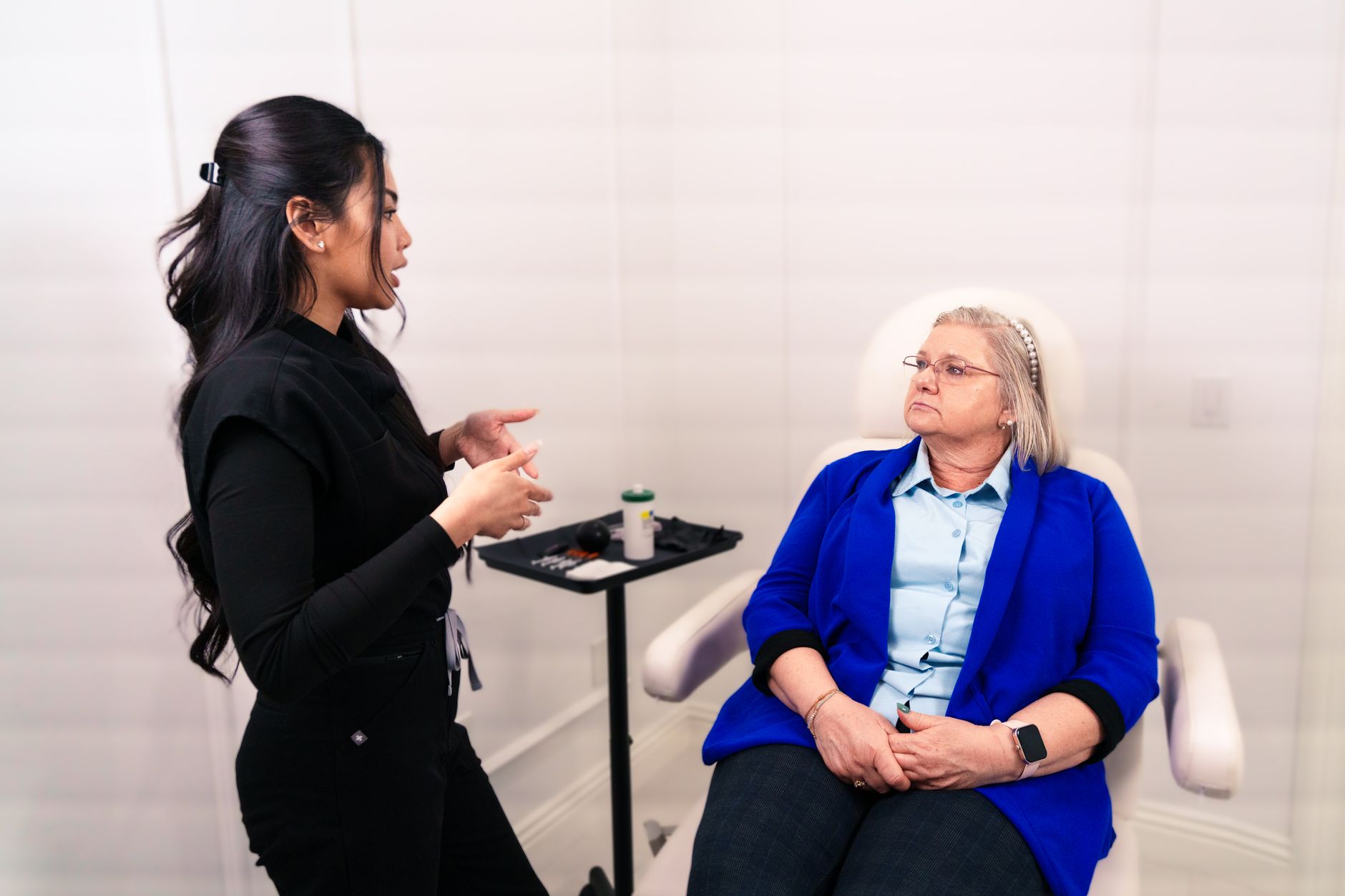
Aesthetics is one of the fastest-growing small business categories in Europe, and it is also one of the most operationally messy. A single owner-operator clinic can juggle bookings, consent forms, before-and-after photos, insurance requirements, drug traceability, social media, review chasing, and a diary that goes wrong the moment one client is late. AI is not going to fix all of that, but by mid-2026 it is quietly doing more of the boring bits than most owners realise.
This guide is a plain-language playbook for med spa owners, aesthetic nurses, and clinic managers who want to know what to actually put in place — not another list of 40 tools. We will walk through where AI pays off, the five workflows to automate first, a tool stack by clinic size, the prompts you can steal, the compliance rules you cannot ignore, and a 30-day pilot plan that will not overwhelm your team.
Where AI actually pays off in an aesthetics clinic
Med spas have a few economic realities that shape where AI matters and where it is a distraction. Your revenue is chair time, so anything that increases the utilisation of your treatment rooms is high value. Your marketing runs on social proof, so anything that improves reviews, referrals, and content output is high value. Your compliance risk is real — anything that reduces the chance of a missed consent form, an incorrect product record, or an off-label claim in an advert is high value.
By contrast, AI-generated "content" that nobody trusts, chatbots that pretend to give medical advice, and image tools that produce fake before-and-afters are the fastest way to a bad Care Quality Commission letter, a hostile Google review, or an advertising standards complaint. The frame we use throughout this article is simple: automate the admin, protect the clinical judgement, and never let AI make a claim you would not make yourself.
The five workflows to automate first
If you only have time to introduce five AI-powered workflows this quarter, these are the ones that pay back within weeks.
1. Booking triage and rebooking chase. A conversational AI receptionist (voice or chat) handles the "how much is Botox?" and "do you have anything on Tuesday?" traffic outside opening hours, books straightforward appointments into your PMS, and escalates anything clinical to a human. On top of that, a nightly script identifies clients who are due to rebook (12-week botulinum toxin cycle, 6-month filler top-up, monthly skin plan) and drafts a personalised WhatsApp or SMS for the front desk to send in the morning. Utilisation goes up 5–10% almost immediately.
2. Consultation summary and treatment notes. An ambient scribe records the consultation on the practitioner's phone (with the client's consent, disclosed on the intake form), produces a structured SOAP-style note, extracts the product batch numbers and doses when read aloud, and pastes it into your patient record system. Practitioners get 20–30 minutes back per clinic day and notes actually get written the same day.
3. Review requests and reputation management. Automated post-treatment messages ask for a review at the moment satisfaction is highest — usually 3–5 days after a botulinum toxin appointment, 2 weeks after filler. AI drafts personalised responses to reviews for the manager to approve, flags anything that hints at a clinical concern for immediate human attention, and summarises trends monthly ("three clients mentioned parking in June").
4. Content production for social and email. AI turns one 20-minute Loom recording from your lead practitioner into a fortnight of Instagram captions, a short-form video script, an email newsletter, and a blog post — all in your clinic's voice, all reviewed by a human before publishing. This is the single biggest time win for solo owners doing their own marketing.
5. Financial admin and stock forecasting. AI reads your bank feed and PMS export weekly to categorise transactions, flag anomalies (a supplier price hike, a treatment losing money after product cost), and produce a plain-English "state of the clinic" summary for Monday morning. For stock, it forecasts demand for consumables and injectables based on booked treatments and historic patterns — useful for anything with a short shelf life or a long lead time.
A tool stack by clinic size
There is no single stack that fits every clinic, but there are three clear tiers based on team size and treatment complexity. Pricing below is indicative for mid-2026 — check current rates before committing.
Solo owner-operator (1 practitioner, 0–1 support staff)
Keep it simple. One general-purpose AI assistant (ChatGPT Plus, Claude Pro, or Microsoft Copilot Pro — around €20 per month), one booking-and-messaging platform with built-in AI (Pabau, Fresha, or Timely — €30–€80 per month), and Canva Pro with AI features for social content (€12 per month). Total AI-related spend: roughly €65–€110 per month, comfortably paid back by two extra appointments a month. Skip ambient scribes and voice agents at this stage — the setup overhead is not worth it for one practitioner.
Small clinic (2–4 practitioners, 1–2 front-of-house)
Add an AI voice receptionist for out-of-hours calls (Goodcall, Dialpad AI, or a Twilio-based custom flow — €80–€200 per month depending on volume), an ambient scribe your practitioners can share (Freed, Heidi, or Nabla for medical use — €90–€130 per practitioner per month), and a marketing tool that automates content batches and review requests (Podium, Birdeye, or Sociable — €200–€400 per month). Total AI stack: €600–€1,200 per month, typically returning 15–25 hours of admin time and one to two extra chair-hours per practitioner per week.
Multi-site or 5+ practitioners
Bring in a proper CRM (HubSpot Starter or GoHighLevel for aesthetics), integrate it with your PMS, and use AI to score leads, personalise nurture sequences, and identify at-risk clients (booked once, never returned). Add a compliance layer that reviews marketing copy and image assets before they go live for medicines advertising, off-label claims, and misleading before-and-afters. This is where a fractional AI or ops consultant starts to pay for themselves — the wiring is more expensive than the tools.
Prompts you can steal today
The single fastest way to see whether AI is worth the fuss is to open ChatGPT or Claude, paste one of these prompts, and see what comes back. Adjust for your clinic's voice.
Rebooking message drafter — for the front desk each morning:
You are the front-of-house assistant at a British aesthetics clinic. Given the client's first name, last treatment, and the recommended interval, draft a warm, professional WhatsApp message inviting them to rebook. Keep it under 40 words, no emojis except a single friendly one at the end, no medical claims, no pressure. Sign off "The team at [Clinic Name]".
Review response drafter — for the manager to approve:
You are responding to a Google review left for a UK medical aesthetics clinic. Draft a reply that (1) thanks the client by first name, (2) picks up a specific detail from their review, (3) never makes a medical claim, (4) never confirms whether the person is or has been a patient (privacy), (5) reads as human, not corporate. If the review is negative, express regret, offer to speak privately by phone, and never diagnose.
Social content batcher — one recording, ten posts:
Here is a transcript of a 15-minute audio note from our lead practitioner about the difference between profhilo and skin boosters. Produce: (a) 8 Instagram captions of 60–100 words each, no medical claims, no before-and-afters implied, in a friendly-expert voice; (b) a 45-second short-form video script; (c) an 800-word blog post outline. Flag any sentence where I have made a claim I should verify against MHRA guidance.
Weekly clinic scorecard — for Monday morning:
Given this week's PMS export (attached) and last week's for comparison, produce a one-page summary covering utilisation by room and practitioner, top three treatments by revenue and margin, no-show rate, rebooking rate, and three specific questions I should ask my team in Monday's huddle.
Compliance, consent, and the boring bits that matter most
This is the section most tool blogs skip. It is also the one that will save you a €10,000 fine, an ASA ruling, or worse. In 2026 the regulatory picture for aesthetics is tightening across most of Europe, and every AI tool you introduce needs to survive four questions.
First, does the client know AI is being used? Ambient scribes, chatbots, and voice receptionists all need to be disclosed on your intake form and website. Consent must be specific and opt-in, not buried in a 4,000-word T&Cs page.
Second, where is the data going? Under the UK GDPR and EU GDPR (and the EU AI Act, phased through 2025–2027), any tool processing health data on your behalf needs a Data Processing Agreement, a lawful basis you can name in one sentence, and — for European clients — data residency you can explain to a regulator. If the tool cannot show you an EU-based processing option, be very careful about what you feed it. Our walkthrough on the EU AI Act for small businesses covers the specifics.
Third, is any AI-generated output making a medical claim? Skin, injectables, and body treatments are advertised under strict rules (MHRA in the UK, the ANSM in France, AIFA in Italy, etc.). "Reduces wrinkles by 40%" or "safe for all skin types" from a ChatGPT draft is a compliance breach even if it never appeared on your website — the manager who approved it is responsible. Every AI-generated marketing asset needs a human check, ideally the same person every time.
Fourth, what is your fallback when the AI is wrong or unavailable? The bigger risk is not that AI hallucinates once — it will — but that your practice becomes so dependent on a single tool that a two-day outage means no consultation notes and no appointments. Our piece on AI vendor and model dependency risk is worth 20 minutes of a Monday morning.
Common mistakes to avoid
We speak to enough clinic owners each month to see the same six mistakes on repeat. Save yourself the tuition.
- Rolling out too many tools at once. Introduce one workflow per fortnight, measure it, and only add the next when the first is embedded. Three tools your team actually uses beats ten they ignore.
- Letting AI write clinical content. Blog posts about "the difference between hyaluronic acid and polynucleotides" written by ChatGPT without a practitioner's edit will be inaccurate, boring, and legally risky. AI is your researcher and typist, not your clinician.
- Generating "before-and-after" images. Do not do this. Ever. Any AI-generated aesthetic result is a misleading advert and, in some jurisdictions, a criminal offence. Only real, consented, unaltered client photos with correct lighting.
- Using consumer chatbots for patient triage. A free chatbot answering "is my swelling normal?" is a clinical decision-support tool in everything but name, and it is not certified for that. Escalate any clinical query to a human within a defined SLA.
- Ignoring your team. The nurse who administers 40 treatments a week knows better than any tool where the 15 minutes of admin waste sit. Ask them first. Buy the tool second.
- Forgetting to renew the ROI check. A tool that saved five hours a week in month one may save zero by month six because your workflow has shifted. Review your AI stack quarterly. If you have not yet worked out how to measure it, our guide on calculating AI ROI gives you the maths in plain English.
A 30-day pilot plan
You do not need a strategy consultant or a full stack to start. Here is the plan we would run if we owned a small clinic tomorrow.
Week 1 — Baseline and one quick win. Pull last month's PMS data. Note utilisation, no-show rate, rebooking rate, and average admin hours per practitioner. Choose one workflow — usually rebooking chase — and run it manually for a week using an AI to draft the messages. Keep score.
Week 2 — Scribe and consultation notes. Pick one ambient scribe with a proper medical DPA (Freed, Heidi, Nabla). Have one practitioner use it for every consultation for a week, with clear client consent language on the intake form. Measure minutes saved per clinic day and practitioner satisfaction.
Week 3 — Marketing content in batches. Record two 15-minute audio notes on treatments you offer. Use ChatGPT or Claude to produce a fortnight of captions, a video script, and a blog outline. Publish, measure engagement, and note how long the human edit takes each time. This is where you learn your clinic's true voice.
Week 4 — Review and decide. Add up the hours saved, the extra appointments booked, and the qualitative feedback from your team. Cross-check against tool costs. Decide which workflows stay, which go, and which one to add next month. Ninety per cent of clinics who reach the end of a real 30-day pilot keep at least two workflows permanently.
What to leave alone (for now)
Not everything AI can do is worth doing in an aesthetics clinic in 2026. Skin analysis apps that make diagnostic-sounding claims without regulatory clearance are a legal minefield. Fully autonomous customer service bots for clinical questions belong to a different risk profile than a hotel or a restaurant. AI-generated influencer content in your clinic's name, without disclosure, will get flagged by the ASA quickly.
The clinics we see winning are boringly consistent: they use AI for the admin, keep the practitioner at the centre of the clinical work, and never let the tools speak in a voice their clients would not recognise. That is not a limitation. That is the whole strategy — and it is the same strategy that wins in almost every professional-services SMB right now. If you want to place your clinic's AI plan inside the wider small business landscape, our guides on how to create an AI strategy for small business and the best AI tools for small business in 2026 are the two pieces to read next.
The bottom line for clinic owners
You do not need to become a "tech clinic" to benefit from AI. Pick one workflow that costs you real hours or real revenue, introduce one tool, measure the change for a fortnight, and only then add the next. Keep every AI-generated marketing asset under human review, keep every clinical decision with a qualified human, and disclose AI use to clients in plain language. Do that, and by the end of Q4 2026 you will have quietly reclaimed two days a month per practitioner, filled more of your diary, and built a compliance story you can actually defend. The clinics who lose in 2026 are not the ones who avoided AI — they are the ones who bought ten tools, trained no one, and stopped paying attention.
Where does your business stand on AI?
Take the free 3-minute AI Readiness Quiz and get a personalised score with your next steps.
Take the Free Quiz →