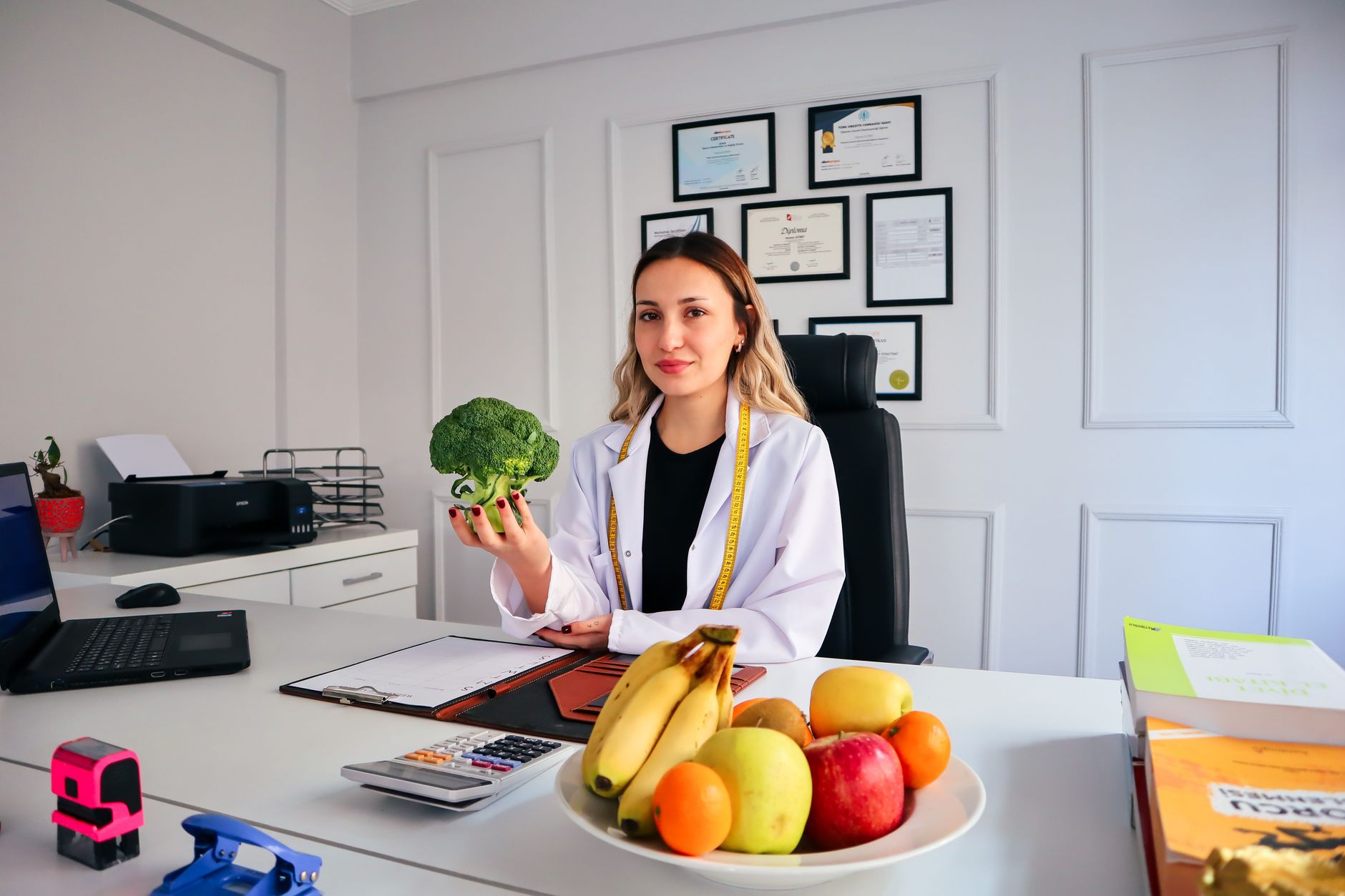
Private-practice dietetics and nutrition is a clinical business hiding inside a content and admin business. The clinical part — the consult itself, the case formulation, the behaviour-change conversation — is the work that earned the qualifications. The part that quietly decides whether the practice is solvent is everything around it: how much time goes into intake forms before a new client even arrives, how long it takes to write up a consult note and a personalised meal plan, how often the social channel actually gets updated, and whether a no-show on Tuesday turns into a filled slot or a lost €90.
That second category is exactly where the 2026 generation of AI tools earns its keep. Vision and language models can now read a three-day food diary photo and pull out a usable nutrition summary in under a minute, draft a culturally-appropriate seven-day meal plan against an agreed energy and macro target, turn a 25-minute consult recording into a structured SOAP note and a client-facing follow-up letter, and produce a steady drip of evidence-based educational content for Instagram, the newsletter, and the website. None of it replaces clinical judgement. All of it gives the practitioner back the evenings and Sunday afternoons that admin currently eats.
This playbook covers the five workflows that pay back fastest for solo dietitians, registered nutritionists, sports nutrition consultants, and small clinics — with a tool stack scaled by practice size, the UK and EU regulatory edges that matter, and a 30-day pilot you can run on your existing caseload.
Why dietetics and nutrition is an unusually good fit for AI
Three structural features of a typical nutrition practice make AI especially high-leverage. First, every new client arrives with a long history — medical, dietary, lifestyle, motivational — that has to be turned into a working case before the first session. Most practitioners do this from a paper questionnaire and a 30-minute phone call. Modern language models can read the intake form and the food diary, surface the three or four clinical hypotheses worth exploring, and draft the opening structure of the consult before the client walks in. The clinician still leads the session; they just stop arriving cold.
Second, the deliverables are document-heavy and templated. Meal plans, shopping lists, recipe swaps, follow-up letters, GP referral updates, body composition reports — these are the artefacts that fill a practitioner's Friday afternoon. They follow patterns. They are also the artefacts clients actually look at between sessions, so the quality matters. AI drafts them in minutes; the clinician edits in minutes instead of building from scratch in hours.
Third, the practice grows through trust and visibility. Nutrition is one of the noisiest information environments online, and clients choose practitioners they have read, watched, or heard explain something in plain language. AI lowers the cost of producing that visibility — the weekly newsletter, the Instagram carousel, the podcast clip transcript, the SEO blog post — from "more than a sole practitioner can sustain" to "a 90-minute Monday morning".
The five AI workflows that pay back the fastest
1. AI-assisted intake and case prep
The single biggest hidden time sink in a solo practice. A new client typically returns an intake form, a three-day food diary, recent blood test PDFs, and a one-paragraph goal statement. Reading all of that properly takes 45 to 75 minutes per client. Most practitioners skim and prep on the fly.
The 2026 workflow: drop the intake documents (with identifying details redacted, or via a clinic-tier AI account with a Data Processing Agreement) into a long-context model like Claude or ChatGPT Team. Use a saved prompt that asks for a one-page case summary — presenting concerns, relevant history, current intake estimate, red flags, suggested questions for the first session, and likely intervention pillars. The clinician reads the page in five minutes and arrives with a working hypothesis instead of a stack of forms.
Realistic numbers from clinics doing this: case-prep time per new client drops from 60 minutes to 10 to 15 minutes, and the first session lands more accurately because the practitioner has already noticed the pattern that would otherwise have surfaced in session two.
2. AI-drafted meal plans and educational handouts
Personalised meal planning is where a practice either looks bespoke or looks like a template mill, and where most practitioners lose the most evening hours. The 2026 toolkit changes the economics. Tools like Nutrium, Practice Better, and Healthie now embed AI meal-plan generation; standalone tools like Eat This Much, PlateJoy, and direct prompting of Claude or ChatGPT with a structured prompt and the client's preferences produce credible plans in 60 seconds.
The pragmatic pattern is to keep the AI inside the practitioner's clinical frame. Feed it the agreed energy target, macro split, allergens and intolerances, cultural preferences, budget, and cooking skill level, plus three or four "non-negotiable" meals the client already enjoys. Ask for a seven-day plan with a shopping list, prep timings, and three swap options per meal. Review for nutrient adequacy, micronutrient gaps the AI tends to under-weight (iron, B12, omega-3, iodine), and any culturally awkward suggestions. Five to ten minutes of editing typically turns the draft into a plan the clinician would sign their name to.
Same pattern applies to the educational handouts that anchor between-session change — the "what to do with hunger between meals" sheet, the "reading a yoghurt label" walk-through, the "training-day vs rest-day" carbohydrate guide. AI produces these in your voice in minutes once you have given it three examples of your existing handouts.
3. AI-summarised consult notes and follow-up letters
The note-writing hour at the end of the day is what turns a satisfying clinical week into a draining one. With explicit client consent and a compliant recording stack, AI scribe tools change the maths. Heidi Health, Freed, Nuance DAX Copilot, and clinic-focused tools like Carepatron and Practice Better's AI notes record the session, produce a structured SOAP or DAP note in the practitioner's preferred format, and draft a client-facing follow-up letter that mirrors what was actually agreed.
Three details make this work in nutrition specifically. The consent script needs to mention recording, AI processing, and where the data is stored — not just "is it okay if I take notes". The follow-up letter is written for the client, not the GP, so the prompt needs to specify reading age, plain language, and a clear action list. And the practitioner still reads and signs every note; the AI saves drafting time, not clinical accountability.
The same scribe pattern shows up across allied health. Our playbook on AI tools for chiropractors and physiotherapists walks through the consent, recording, and integration mechanics in more depth.
4. The content engine: social, newsletter, and SEO
Most independent nutritionists know they should post more. Most don't, because the cost of writing a credible, evidence-aligned Instagram caption or newsletter is 45 minutes the practitioner does not have after a full clinical day. AI changes the unit economics of content from "one post a fortnight" to "three posts a week without skipping a clinic day".
The workflow has three parts. First, an idea bank: once a quarter, run a 30-minute prompt session with Claude or ChatGPT against your specialty, your typical client base, and the questions that come up in session. Out comes 60 to 80 content ideas, each tagged by format (carousel, reel script, newsletter, blog). Second, batched drafting: every Monday, pick five ideas, give the AI your voice samples and a brief, and ask for first drafts. Edit ruthlessly — clinical accuracy and tone are non-negotiable. Third, repurposing: every long-form piece (newsletter, podcast episode, blog) is turned into three short-form posts and a YouTube Short caption by the same AI in one pass.
The SEO angle matters because nutrition is one of the highest-intent local search markets. A weekly blog post answering a specific question ("how much protein does a 65-year-old need", "what does a typical day on a low-FODMAP diet look like", "is creatine safe for women in perimenopause") is the single most reliable way to bring qualified enquiries into the inbox. The mechanics of running an AI-assisted content engine are covered in our local business AI marketing strategy guide.
5. Back-office: scheduling, billing, no-show recovery
The hidden margin leak in solo and small-clinic practice is empty slots. A 10 percent no-show rate on a 25-session week is €225 to €400 of lost revenue, and the time to refill those slots manually rarely repays itself. AI tightens the loop.
Two practical setups. The first is an AI front-desk assistant on your booking page (Tidio, Crisp, or a Voiceflow-built bot) that answers the top 15 questions clients ask before booking — "do you take private health insurance", "what's the difference between a dietitian and a nutritionist", "can you help with PCOS", "is the first session online or in person" — and books a discovery call without the practitioner ever touching the inbox. The second is an AI-triggered waitlist: when a session cancels less than 48 hours out, the system messages the next three suitable clients on a saved waitlist with a one-tap accept link. Cancellations that previously stayed empty now refill 50 to 70 percent of the time.
Layer on AI invoice chasing through Xero, QuickBooks, or FreeAgent for the inevitable late payers, and AI-categorised receipts via Dext, and the typical solo practitioner reclaims 3 to 5 hours of bookkeeping a week.
A tool stack scaled by practice size
Solo practitioner (1 clinician, home or part-time clinic)
Keep it light and clinic-friendly. Use Claude or ChatGPT Team (€25/month) for intake summarisation, meal-plan drafting, and content. Add a free or low-cost practice management platform like Practice Better, Healthie, or Nutrium starter tier (€30 to €60/month) that includes booking, client portal, and basic meal-plan tooling. Add a scribe like Heidi Health or Freed (€90 to €120/month) only once you've decided you want the consult-note workflow. Total stack: around €150 to €200/month. Realistic time saving: 8 to 12 hours a week, mostly evenings and Sundays.
Small clinic (2 to 4 clinicians)
The question shifts from "which tool" to "what gets standardised across clinicians". Upgrade the practice management platform to a multi-practitioner tier (Practice Better, Healthie, or Nutrium business plans, typically €120 to €250/month). Centralise the AI scribe subscription. Add a clinic-tier Claude or ChatGPT account with a Data Processing Agreement and a shared library of approved prompts. Build a content workflow owned by one clinician on a half-day a week, and have an AI auto-reply on the website and WhatsApp for after-hours enquiries (Tidio or Crisp, €30 to €50/month). Total: €400 to €700/month. The note-writing time saved alone usually pays back the stack inside six weeks.
Multi-clinic or digital nutrition company (5+ clinicians)
The spine becomes a clinical platform with strong API integrations — Healthie, Nutrium, or a custom build on Practice Better Enterprise. AI tools are chosen for native integrations and audit trail. Add a full reputation tool (Birdeye, Podium, or NiceJob, €200 to €400/month) for review generation across clinicians, and budget for a content lead who runs the AI-assisted publishing engine. Total stack: €1,500 to €3,500/month. At this size, clinical governance — who approves AI-generated handouts, who signs off meal-plan templates — matters as much as tool choice.
The regulatory edges that matter (UK and EU)
Nutrition practice in the UK and EU sits at the intersection of clinical data protection, professional title rules, and the new AI Act. Three areas need careful setup.
GDPR and health data. Client intake forms, food diaries, body composition data, blood test results, and consult recordings are all special-category personal data under UK GDPR and the EU GDPR. Your AI vendor must offer a Data Processing Agreement, ideally with UK or EEA data residency. Free consumer-tier accounts where data may be used for model training are not appropriate — pay for Claude Team, ChatGPT Team or Enterprise, or use clinic platforms that have already signed the DPA on your behalf. Document the lawful basis in your privacy notice; "consent" is the cleanest for clinical AI processing, but it must be specific and revocable.
Professional title and scope. "Dietitian" is a protected title in the UK and most EU member states — AI does not change that. Your AI-drafted meal plans, handouts, and follow-up letters go out under your registered name and HCPC, CORU, or member-state equivalent registration. Treat AI output as a draft from an unregistered junior: helpful, fast, and never the final clinical word. "Nutritionist" rules vary by country — check your member-state register and adjust accordingly.
EU AI Act. Most nutrition-practice AI use cases (intake summarisation, content, scheduling) are minimal-risk under the 2026 AI Act. Two areas to watch. AI-assisted clinical decision-support that influences a diagnosis or treatment moves into the high-risk category and requires conformity assessment — this is rare in private nutrition practice but worth knowing. And any AI you build that interacts directly with clients must disclose it is AI under the Act's transparency rules. Our overview of the EU AI Act for small business walks through the practical compliance steps.
Practitioners regulated by the HCPC, BANT, AfN, CORU, or member-state equivalents should also check whether their professional body has issued specific AI guidance — several published first drafts during 2025 and 2026.
A 30-day pilot you can run alone
The mistake most practitioners make is signing up to four AI tools on a Sunday evening and trying to use all of them on Monday. Don't. Pick one workflow, run it for four weeks against measurable numbers, then add the next.
Week 1 — Intake and case prep. For every new client booked, use a saved AI prompt to turn the intake form and food diary into a one-page case summary. Track two numbers: minutes spent preparing for first session and your own confidence rating (1 to 5) walking into the room.
Week 2 — Meal-plan drafting. Pick three returning clients due for a meal-plan refresh. Draft each plan with AI against your structured prompt; edit and finalise. Track minutes per plan compared with your previous baseline and client feedback on the plan in the next session.
Week 3 — Content engine. Spend 90 minutes on a Monday batching five social posts and one newsletter or blog. Publish across the week. Track posting cadence (this is the real metric) and inbound enquiries that mention a specific post.
Week 4 — Decide what scales. Compare the numbers. Case-prep time down without quality dropping? Meal-plan time halved? Posting frequency actually held up for four weeks? Pick the one or two workflows with the clearest wins, document them as one-page SOPs, and only then add a scribe or a chatbot. Don't bolt on a fifth tool until the first two feel boring.
The nutrition practices that quietly run circles around their competitors over the next two years are not the ones with the most AI tools. They are the ones that took the two most draining admin jobs — intake reading and meal-plan drafting — and made them feel like ten minutes instead of two hours.
The mistakes to avoid
Sending the AI-drafted meal plan without reading it line by line. Language models will under-weight micronutrients, recommend foods that conflict with the client's stated allergens if the prompt is sloppy, and occasionally invent recipe steps that don't work. Read every plan as if a junior wrote it and you are signing it off — because clinically that is exactly what you are doing.
Pasting client data into free consumer AI accounts. The most common compliance failure. If your AI account does not have a Data Processing Agreement with you and clear training-opt-out, it is not appropriate for client data. Move to a paid Team or Enterprise tier before the first client document goes near it.
Letting the content engine drift off-evidence. AI-generated nutrition content is the fastest way to publish something subtly wrong — a mis-stated RDA, an out-of-date protein guideline, a misremembered study. Build a fact-check step into the workflow: every claim with a number gets verified against your own clinical reference (BDA, EFSA, NHS, member-state equivalent) before publishing.
Forgetting the disclosure. Clients should know when AI is part of the workflow — in the consent script, in the privacy notice, and in any client-facing material that was AI-drafted. The professional reputational risk of being seen to hide it is far higher than the risk of saying so plainly.
Skipping the measurement. Track four numbers: hours saved per week, client satisfaction (a single end-of-session rating), no-show rate, and inbound enquiries per week. Without numbers you cannot tell whether AI is paying back — or where the next hour of practitioner attention belongs.
Where to start this week
If you do nothing else after reading this, do three things. Build one saved AI prompt that turns your intake form and food diary into a one-page case summary, and use it on the next three new clients. Draft your next two meal plans with AI against a structured prompt and your standard clinical frame, and time yourself; the gap will surprise you. And batch a single content session on Monday morning for the next four Mondays. Three workflows, three commitments, one measurable week-on-week improvement.
The practitioner who reclaims six to ten hours a week from intake reading, plan drafting, and content writing spends some of them on more clients, some on professional development, and some on the boring practice-building that compounds over a career. None of it requires being good at AI. It requires picking two workflows and running them until they're boring.
Where does your business stand on AI?
Take the free 3-minute AI Readiness Quiz and get a personalised score with your next steps.
Take the Free Quiz →