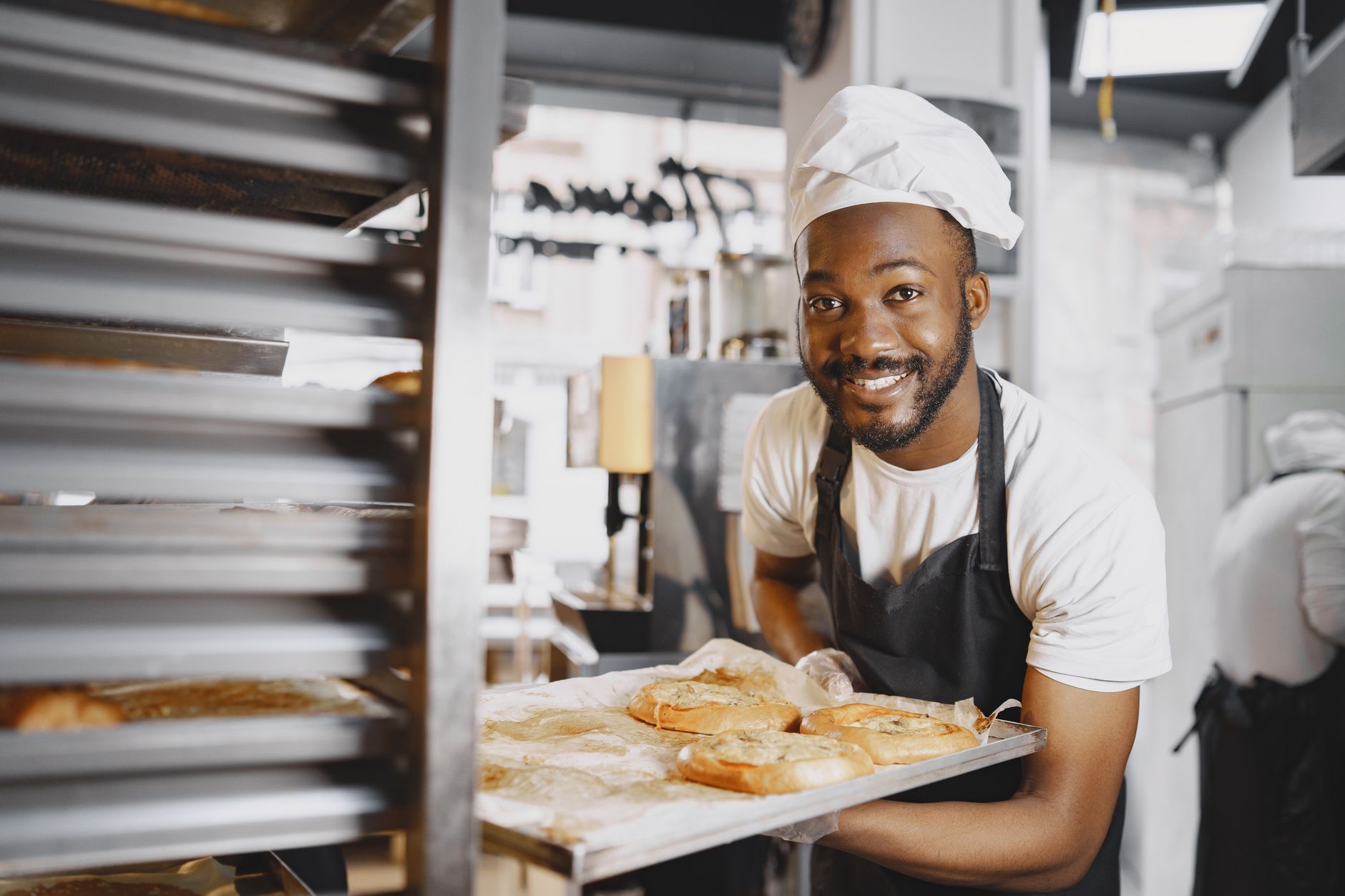
Running a small bakery in 2026 is a demanding business. You are on your feet from 4am, juggling flour prices, a wedding cake enquiry that came in during the school run, a wholesale account that wants an extra 30 loaves on Fridays, and an Instagram grid that has not been updated in a fortnight. AI will not knead your dough — but it can take the admin off your plate, cut the waste that is silently eating your margin, and help you sell more of what you already make.
This is a practical playbook, not a hype piece. Every workflow below is one that owners of independent bakeries and small chains are actually using this year. Pick two or three that map to your biggest headaches and ignore the rest.
Where AI actually earns its keep in a small bakery
Bakeries have a specific economic reality that shapes where AI helps most. Your ingredients are cheap by the kilo but expensive when they go in the bin. Your product is perishable within hours. Your busiest hours are non-negotiable. Your margins live and die on production accuracy and repeat visits.
The AI tools worth paying for are the ones that help you do four things: forecast production better, respond to customer enquiries faster, get more mileage out of your marketing, and see patterns in your own sales data. Everything else is optional.
Cutting waste with better production forecasting
Ask any bakery owner where their real money leaks and you hear the same answer: over-baking on the wrong days, under-baking on the right ones. A typical independent bakery throws away 8 to 15 per cent of daily production. On a shop turning over €4,000 a week, halving that waste is worth roughly €150 to €300 a week in recovered margin.
You do not need a specialist bakery AI system to make a dent in this. Export a rolling 90-day sales report from your POS (Square, SumUp, Lightspeed, Toast and most modern tills give you a CSV), drop it into Claude or ChatGPT, and ask for a breakdown by product, day of week, and weather where relevant. A prompt as simple as "Here is 90 days of till data. Give me an average daily production plan for each product by day of the week, flag any items where actual sales varied by more than 20 per cent from the average, and suggest a Friday and Saturday bake plan that reflects the pattern" will get you a first draft you can adjust with common sense.
Repeat this monthly with fresh data and you build up a bake sheet that reflects your actual customers, not a template from a baking manual. Forecasting-specific tools such as Shelfie and Delicious Data now offer bakery-tuned versions of this workflow, but for most single-shop bakeries a spreadsheet plus a monthly AI review is enough to start.
Handling custom cake and wholesale enquiries without dropping the ball
Custom cakes and wholesale accounts are where the fat margins live. They are also where most independent bakeries lose enquiries by simply being too busy at the counter to reply. A 24-hour reply delay on a wedding cake enquiry loses you the booking to the bakery down the road that answered in ten minutes.
The fix here is a shared inbox with an AI-drafted first reply. Route your enquiries — from Instagram DMs, your website form, and hello@ email — into a single inbox using something like Front, Missive, or Google Workspace with the free Gemini side panel. Set up a saved AI prompt that reads incoming enquiries and drafts a warm, on-brand reply asking the four or five questions you always need to quote a custom cake: date, guest numbers, flavour preferences, dietary requirements, and rough budget.
You are not sending the AI reply automatically — you are having it draft, so that when you sit down at 3pm you approve fifteen replies in fifteen minutes instead of writing them from scratch. Owners who move to this pattern report reply times dropping from two days to two hours and quote-to-booking rates rising 20 to 40 per cent, simply because they are now the first bakery the customer hears back from. The same workflow handles wholesale enquiries: "Draft a reply thanking them, confirming what we can supply, asking about volumes, delivery days and lead time, and suggesting a sample tasting" gets you 80 per cent of the way there.
Social media and food photography that stops the scroll
Bakeries are visual businesses, and social media should be the cheapest customer acquisition channel you have. In practice it gets skipped for weeks at a time because nobody has the energy to caption a photo at 6pm.
Two AI workflows change the maths. The first is batch caption writing: once a week, take 10 to 20 phone photos of your bakes, drop them into ChatGPT (which handles images natively) or Claude, and ask for on-brand captions. A simple system prompt — "We are a small sourdough and pastry bakery in Bristol. Warm, unfussy tone. British English, no emojis, no sales language. Caption these photos, each under 30 words, ending with a soft call to visit or pre-order" — saves an hour a week and produces more consistent voice than writing in the moment.
The second is a monthly content plan built from your own sales calendar. Feed AI your upcoming key dates — Easter, Mother's Day, wedding season peaks, local events, seasonal ingredient windows — and ask for a four-week posting schedule with one hero post per week and short daily fillers. Combine this with our guide on using AI for social media management, and the Google Business Profile tactics in our local business AI marketing strategy playbook, and you go from posting sporadically to posting on purpose.
Front-of-house, POS, and customer loyalty
Modern bakery POS systems collect an extraordinary amount of data that most owners never look at. Once a month, export your sales data and ask AI a specific set of questions: "What products have grown or declined the most versus the previous 30 days? Which product pairings appear most often in the same basket? What is the average basket value by day part, and where is the biggest opportunity to lift it?"
The answers rarely reveal something you could not have worked out with a spreadsheet and an afternoon — but the afternoon is the point. AI compresses the analysis to twenty minutes, which is the difference between doing it every month and doing it once a year.
For loyalty, most bakery POS platforms integrate with Square Loyalty, Toast Loyalty, or Yotpo. Use AI to write the campaign copy — a "we miss you" email to customers who have not visited in six weeks, a birthday cupcake voucher, a Wednesday afternoon "quiet hours" offer to smooth demand. Small nudges, cheap to send, and the copy takes minutes.
A tool stack by bakery size
Not every bakery needs the same setup. A rough guide:
- One-person and micro bakeries (up to €150k turnover): A single ChatGPT Plus or Claude Pro subscription (around €20 a month), your existing POS, and free Google Workspace tools. That is it. Focus on custom cake replies and weekly social captions.
- Small independent shops (€150k–€600k turnover, 2–6 staff): Add a Team plan of your chosen AI (around €25 per user per month for the counter manager and owner), a proper shared inbox such as Front or Missive, and a monthly 90-minute "sales review with AI" habit. Consider a lightweight forecasting layer if waste is above 10 per cent.
- Multi-site or wholesale-heavy bakeries (€600k+ turnover): Add a dedicated forecasting tool (Shelfie, Delicious Data, or a custom setup in your accounting stack), integrate AI drafting into your CRM for wholesale account management, and start measuring waste and forecast accuracy weekly.
Whatever size you are, resist the urge to buy the whole stack in month one. Owners who succeed with AI in bakeries almost always start with a single workflow, get it working, and only add the next one when the first is a habit.
The bakeries winning with AI in 2026 are not the ones with the fanciest tools — they are the ones who use one simple AI habit consistently for three months.
A 30-day pilot you can actually run
If you want a concrete way to start, here is a pilot that fits around real bakery hours.
- Week 1 — Set up. Pick one AI tool (ChatGPT or Claude), get on the paid plan, and write two saved prompts: a custom cake enquiry reply and a weekly social caption prompt. Do this at the kitchen table on your day off — one hour, tops.
- Week 2 — Replies. Run every custom cake and wholesale enquiry through the drafting prompt for a week. Measure your average reply time before and after. This alone tends to be the moment owners stop being sceptical.
- Week 3 — Captions and content. Batch a week of social posts on a Sunday evening using AI drafts from your own photos. Post on schedule. Note which posts drive footfall or DMs.
- Week 4 — Sales review. Export 30 days of POS data. Run three simple AI prompts on it (product mix, basket pairings, day-of-week patterns). Adjust next week's bake plan based on what you find.
At month end, tot up the extra bookings, the reduced waste, and the hours you got back. If AI is not paying for itself several times over, stop. If it is, pick the next workflow and repeat.
Where this fits in a wider AI strategy
Bakeries are a specific case of a broader pattern. Small, product-driven businesses win with AI by using it to sharpen the parts of the business that were always hard to do well at their scale — forecasting, marketing consistency, fast enquiry replies, and analysis of their own data. If you want to step back and see the full picture, our guide on how to create an AI strategy for small business covers the framework in plain language, and our ROI of AI implementation guide walks through the maths in concrete terms for a shop of your size.
The bottom line
You do not need a bakery-specific AI product to see real gains. You need one general AI subscription, three saved prompts, and the discipline to run them weekly for a quarter. Start with custom cake replies if bookings are slipping through the cracks. Start with production forecasting if waste is your biggest bleed. Start with social captions if your grid has gone quiet. The best AI workflow is whichever one you will still be doing in October.
Where does your business stand on AI?
Take the free 3-minute AI Readiness Quiz and get a personalised score with your next steps.
Take the Free Quiz →